
The real estate Bondi Beach scene continues to baffle first-time buyers, not because of what is listed, but because of what is left out. A suburb where apartment medians cross $1.55m and houses trade at $4.4m demands clarity up front – not price guessing, not vague hand-waving, but tangible detail about what shapes those numbers and what buyers should check before signing anything.
Real estate Bondi Beach pricing reflects more than location and bedroom count. Understanding the eleven cost layers that separate a straightforward purchase from an expensive surprise equips you to ask sharper questions, spot overreach early, and walk into negotiations with both eyes open.
Key Takeaways
- House medians around $4.4m and unit medians near $1.66m set the baseline – before premiums for views, parking, and beach access
- Recent unit sales moved in 25-42 days, with houses taking closer to 66 days on market
- Rental yields sit at roughly 2.5% for houses and 3.3% for units, so buyer intent matters upfront
- Commission structures, contract terms, and after-sale service vary widely between agencies
- A transparent breakdown of what you are actually paying for – and what you are not – prevents late-stage budget shocks
Understanding the Median Price Split Between Houses and Apartments
Bondi Beach operates two separate markets under one postcode. Houses traded at a median of roughly $4.4m-$4.7m across recent datasets, while apartments settled near $1.55m-$1.66m. That spread is not cosmetic – it reflects fundamentally different buyer pools, financing structures, and holding strategies.
A two-bedroom unit at 2/22-28 O’Brien Street sold for $1.95m in May 2026, sitting above the broader unit median but well within the range for apartments with better aspect or proximity to Campbell Parade. At the luxury end, a three-bedroom on Notts Avenue changed hands at $24m, illustrating how ocean frontage, uninterrupted views, and prestige-street positioning create a premium layer largely separate from the general market.
One-bedroom units track around $1.08m median; two-bedroom units closer to $1.78m. House transactions are far sparser – recent 12-month samples show 216 house sales against 1,391 unit sales over a six-year review. That imbalance means apartment pricing provides more consistent, recurring data than house pricing, where a small number of high-value sales can swing the median sharply.
Buyers who focus on the suburb-wide median without splitting property type will misread the market. An apartment purchaser using the $4.4m house figure as a reference point wastes time; a house buyer using unit medians underestimates the actual floor price by roughly $3m. Bondi real estate purchase costs depend first on which category you enter, then on specific attributes within that category.
What Drives the Premium Above Median
The difference between the suburb median and what you actually pay comes down to six attributes, each of which compounds rather than adds linearly.
| Attribute | Effect on Pricing |
|---|---|
| Ocean or beach view | Substantial uplift, especially on north-facing aspect |
| Walking distance to Campbell Parade | Highly sought, narrows stock availability |
| Secure parking (one or two spaces) | Essential for most buyers, significant gap if absent |
| Outdoor space (balcony, terrace, courtyard) | Separates internal-only apartments from lifestyle-oriented stock |
| Renovation quality and recentness | Fresh finishes command faster sales and tighter competition |
| Notts Avenue or Hall Street positioning | Prestige-street premium applies immediately |
These elements stack. A two-bedroom with parking, balcony, and partial water glimpse will sit above median. Add a full north-facing ocean view and a Notts Avenue address, and the gap widens considerably. Buyers who start their search using only the median figure will repeatedly encounter listings that seem overpriced – until they recognise which premium drivers are present.
How Commissions and Fees Are Structured in the Eastern Suburbs
Real estate agent commissions in Sydney typically range between 1.5% and 3.5% of the sale amount. That is a broad bracket, and the actual figure within it depends on property type, sale method, marketing spend, and negotiation. A $1.66m apartment at 2% commission costs the seller roughly $33,200; at 3%, it is $49,800 – a difference worth clarifying before signing the agency agreement.
Commission is only one layer. Marketing costs – photography, styling, listing syndication, print advertising, and digital campaigns – sit separately and can run into thousands. Some agencies bundle these into a flat-fee package; others charge itemised invoices that escalate as the campaign extends. Ask whether quoted marketing budgets include contingency for extended campaigns, and whether any portion is refunded if the property sells faster than expected.
After-sale services vary widely between agencies. Some provide settlement coordination, conveyancing liaison, and handover documentation at no extra charge. Others stop at contract exchange and leave the buyer and seller to manage the rest. Levy Property Group includes transparent after-sale support as part of the full-service offering, which removes a common stress point for first-time sellers who have never navigated settlement timelines before.
Transparency in commission structure is not a courtesy – it is a test of how the agency operates under pressure. An agent who hedges on percentage, buries clauses in fine print, or refuses to break down marketing line items is signalling how disputes will be handled later. The commission conversation should happen in the first meeting, not the week before listing.
Rent Versus Ownership Cost Comparison
House rents in Bondi Beach sit around $1,787-$2,000 per week; unit rents range from $1,000 to $1,200 per week depending on size and location. A two-bedroom apartment renting at $1,200 per week generates roughly $62,400 annual income, which against a $1.78m median purchase produces a gross yield of approximately 3.5%.
Yield alone does not tell the full story. Owners carry strata levies (often $2,000-$4,000 per quarter for older buildings, higher for complexes with pools or lifts), council rates, water rates, insurance, and maintenance reserves. A property returning 3.5% gross may net closer to 2.5% after those deductions, which explains why most Bondi apartment buyers are owner-occupiers rather than pure investors.
Houses face different economics. A $4.4m house renting at $2,000 per week yields approximately 2.4% gross – low enough that landlord cashflow is negative in most scenarios once loan servicing, rates, and upkeep are accounted for. House buyers in Bondi Beach typically purchase for lifestyle, school zoning, or long-term capital appreciation rather than rental return.
Renters considering a shift to ownership should model the full cost structure, not just the mortgage. A buyer stretching to a $1.66m unit with a 10% deposit faces monthly repayments, quarterly strata fees, annual rates, and irregular but inevitable special levies. If total outgoings exceed what you currently pay in rent by more than 20%, the financial case for buying weakens unless you value ownership intangibles – stability, renovation freedom, capital gains exposure – highly enough to justify the gap.
Time on Market and Selling Speed
Units in Bondi Beach moved faster than houses across recent datasets, with median selling periods around 42 days for apartments and 66 days for houses. A separate two-bedroom snapshot showed a 25-day median, suggesting that well-positioned, competitively priced stock clears quickly while outliers sit longer.
Speed depends on pricing accuracy at launch. Apartments listed within 5% of recent comparable sales attract multiple enquiries in the first week. Those priced 10-15% above market sit through two or three price reductions before finding a buyer, often finishing below where a realistic opening price would have landed them. The cost of overpricing is not just time – it is the reputational signal sent to every buyer who watches the listing age and assumes something is wrong with the property.
Houses face a narrower buyer pool, which extends median days on market but also creates less predictable timelines. A house priced at $4.7m might sell in three weeks if it meets a specific buyer’s exact brief – school zone, renovation quality, parking, and garden – or it might sit for four months if those elements are missing or poorly communicated in the listing. What Bondi real estate actually costs is shaped as much by how long you are willing to wait as by the opening price you set.
Sellers often misjudge urgency. A property that takes 66 days in a stable market can take 90-120 days if economic conditions shift, interest rates rise, or competing listings flood the same price bracket. Agents who promise fast sales without data to support the claim are selling hope, not strategy. Ask for comparable sales timelines over the preceding six months, not just the best-case anecdote.
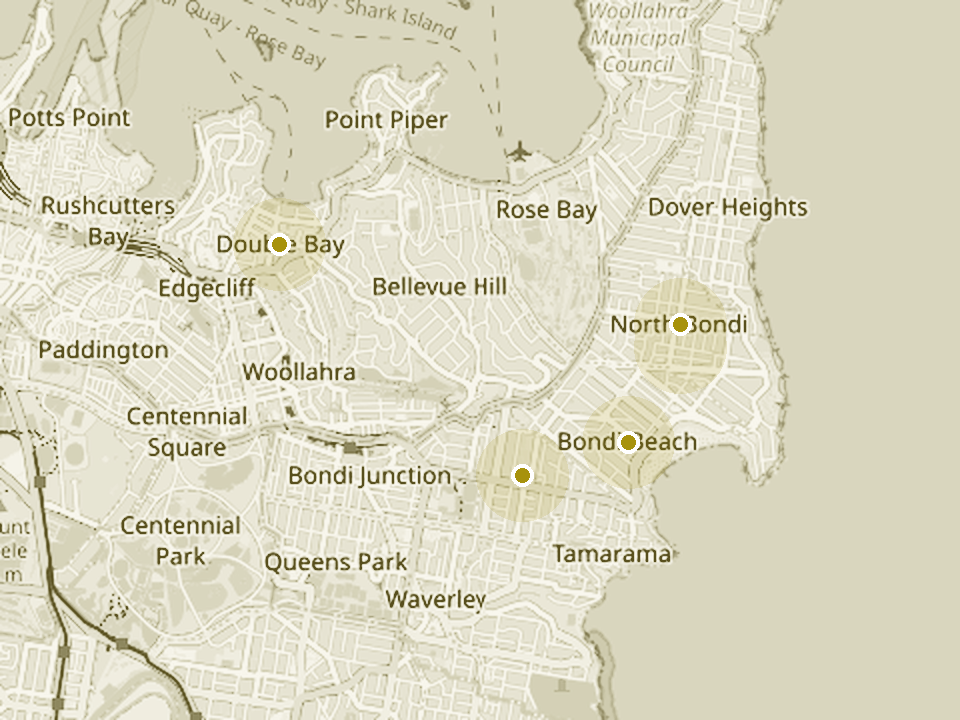
Contract Terms and Pre-Purchase Checks Buyers Miss
Contract terms in New South Wales real estate transactions carry binding obligations that most first-time buyers skim rather than read. Cooling-off periods, deposit structures, settlement timelines, and special conditions belong in the early conversation, not the week before exchange.
A standard residential contract in NSW allows a five-business-day cooling-off period for buyers who exchange outside of auction. That period begins the moment contracts are exchanged, not when you first see the contract. Buyers who assume they have a week to reconsider after signing often discover they are already three days into the window, with penalties triggered if they withdraw. The cooling-off waiver – sometimes pushed by agents eager to secure unconditional exchange – removes your only exit route if building reports, strata searches, or financing fall through.
Strata reports reveal levies, special levies planned or in progress, building defects, sinking fund balances, and whether the owners corporation is engaged in litigation. A building with a $200,000 special levy approved but not yet called will hit you the month after settlement, and that liability is not always disclosed upfront. Order the strata report early, read the financials section, and if anything looks unclear, ask a solicitor to interpret it before you exchange.
Building and pest inspections are not mandatory, but skipping them is a gamble. A unit in a well-maintained block can still have structural issues in the specific apartment – plumbing leaks behind walls, electrical faults, balcony concrete delamination. Houses face broader risk: termite damage, foundation movement, roof deterioration, asbestos in older builds. The inspection costs a few hundred dollars and can save you tens of thousands in post-purchase rectification.
Settlement timelines default to 42 days in most NSW contracts, but that period can be shortened or extended by negotiation. Buyers relying on finance should factor in bank processing delays, valuation turnaround, and document back-and-forth. A rushed 21-day settlement leaves no buffer if the lender requests additional information or if the valuation comes in under contract price. NSW Fair Trading guidance on buying and selling property covers contract obligations in detail, and it is worth reading before you sign anything.
What Agency Transparency Actually Looks Like
Transparency is not a marketing claim – it is a documented behaviour pattern that becomes obvious in how an agency communicates costs, timelines, and obligations. An agent who provides a written commission breakdown, itemised marketing budget, and comparable sales data in the first meeting is demonstrating process discipline. One who defers those details until after the listing agreement is signed is deferring accountability.
Levy Property Group operates on the principle that buyers and sellers should know exactly what they are paying for and why. That includes upfront commission structures, clear marketing spend allocation, and transparent disclosure of what after-sale services are included versus what sits outside the agency scope. The approach removes ambiguity and prevents the late-stage disputes that emerge when assumptions go unwritten.
Transparent agencies also disclose conflicts of interest immediately. If the agent represents both buyer and seller – a dual-agency scenario permitted in NSW but requiring written consent – that fact belongs in the opening conversation, not buried in contract fine print. Dual agency is not inherently problematic, but undisclosed dual agency is a red flag for how the relationship will unfold under pressure.
Ask prospective agents three direct questions: What is your commission structure, and is it negotiable? What does the marketing budget cover, and what happens if the campaign extends beyond the initial period? What after-sale support do you provide between exchange and settlement? The quality of the answers – specificity, documentation, willingness to put terms in writing – tells you more than any testimonial or ranking claim.
Luxury Segment Pricing Dynamics
The luxury real estate Bondi Beach segment operates on different signals than the broader market. Properties above $5m for houses and above $3m for apartments are judged less on median comparables and more on unique attributes – architectural pedigree, unobstructed ocean views, privacy, outdoor entertainment space, and street prestige.
A three-bedroom apartment on Notts Avenue that sold for $24m illustrates how waterfront positioning and view corridors create a pricing tier largely decoupled from suburb medians. Buyers in this segment are not searching for value per square metre – they are solving for lifestyle outcomes that cannot be replicated elsewhere. The pool of comparable sales shrinks, which makes valuation more subjective and negotiation more dependent on buyer motivation than on statistical benchmarks.
Luxury properties also take longer to transact, not because of defects but because the buyer universe is smaller and more geographically dispersed. A $1.66m apartment draws interest from Eastern Suburbs locals, interstate relocators, and international students or investors. A $7m house draws interest from a much narrower cohort – often require pre-qualified finance, direct relationships with prestige agents, and willingness to move quickly when the right property appears.
Marketing for luxury listings differs structurally. High-end properties are rarely mass-advertised – they circulate through private networks, off-market whispers, and curated buyer lists. Agents who specialise in this segment maintain databases of pre-vetted buyers and often match properties before they are formally listed. If you are selling a prestige asset, ask prospective agents how many buyers they already have on file in your price range, and whether they are willing to run a discrete off-market campaign before going public.
How Levy Property Group Structures Client Relationships in the Eastern Suburbs
Levy Property Group approaches real estate transactions with the understanding that clarity up front prevents friction later. Whether you are buying your first apartment in North Bondi or selling a house in Vaucluse, the agency provides a documented breakdown of what you will pay, what you will receive, and what falls outside the engagement scope.
Principal Chana Levy and the team – sales executive Nathan Antunes and operations coordinator Zara Paton – work with buyers and sellers across Bondi, Rose Bay, Dover Heights, Bellevue Hill, Double Bay, and surrounding Eastern Suburbs pockets. The agency has built a reputation over more than 20 years for delivering results without resorting to high-pressure tactics or opaque fee structures.
Services include premium property sales, real estate consultancy, marketing strategy, negotiation support, and after-sale coordination through to settlement. The agency also offers access to wealth management, finance, investing, renovating, architecture, and marketing resources – a broader service envelope than most boutique agencies provide, designed to support clients through the full property lifecycle rather than just the transaction itself.
Levy Property Group was named Residential Office of the Year at the 2026 REINSW Awards for Excellence, with Chana Levy receiving the John Greig OAM Community Service Award and being named a finalist for Residential Salesperson of the Year. Those recognitions reflect both transaction performance and the agency’s commitment to transparent, client-focused service.
If you are navigating the real estate Bondi Beach market – whether as a first-time buyer trying to decode pricing layers or as a seller setting realistic expectations – working with an agency that puts transparency and local expertise ahead of volume targets makes the process measurably less stressful. Get in touch to discuss your specific situation and what a clear, structured approach looks like in practice.
Frequently Asked Questions
How do I choose a reliable real estate agent in the Eastern Suburbs?
Look for documented transparency – written commission breakdowns, itemised marketing budgets, and a willingness to provide comparable sales data in the first meeting. Ask how they handle dual agency, what after-sale support they offer, and whether their fee structure is negotiable. Check recent transaction history in your suburb and price bracket, and speak to past clients if references are offered. An agent who defers cost discussions or avoids specifics is signalling how they will operate under pressure.
What commission do real estate agents typically charge in Sydney?
Sydney real estate commissions generally range between 1.5% and 3.5% of the sale amount. The actual rate depends on property type, sale method, marketing spend, and negotiation. A $1.66m apartment at 2% commission costs roughly $33,200; at 3%, it is $49,800. Always ask for the rate in writing before signing an agency agreement, and clarify whether marketing costs are included or billed separately.
How much should I budget for marketing when selling a Bondi property?
Marketing budgets vary widely depending on campaign scope, but expect itemised costs for professional photography, styling, online listing syndication, print advertising, and digital campaigns. Some agencies bundle these into a flat-fee package; others charge per item. Ask whether the quoted budget includes contingency for extended campaigns, and whether any portion is refundable if the property sells faster than expected. Transparent agencies provide a written breakdown upfront, not after the listing agreement is signed.
Why do Bondi Beach apartments sell faster than houses?
Apartments attract a broader buyer pool – first-time buyers, downsizers, interstate relocators, and investors – which creates more enquiry volume and faster transaction timelines. Recent data shows units selling in roughly 42 days versus 66 days for houses. Houses face a narrower, more price-sensitive buyer universe, and transaction speed depends heavily on whether the property matches a specific buyer’s exact brief for school zoning, renovation quality, parking, and outdoor space.
What are the main cost drivers that push Bondi property above median?
Six attributes compound to create premiums above suburb medians: ocean or beach views, walking distance to Campbell Parade, secure parking, outdoor space (balcony or terrace), recent high-quality renovation, and prestige-street positioning such as Notts Avenue or Hall Street. These elements stack rather than add linearly – a two-bedroom with parking and a balcony sits above median, but add a full north-facing ocean view and a Notts Avenue address, and the gap widens considerably. Ask your agent to show comparable sales with and without the specific attribute you are considering to clarify whether the premium asked is defensible.
What This Means for Real Estate Bondi Beach
Real estate Bondi Beach pricing is shaped by layers that extend well beyond headline medians – location premiums, commission structures, contract obligations, and market timing all compound to determine what you actually pay and what you ultimately receive. Buyers and sellers who start with clarity about these eleven cost and process factors position themselves to negotiate confidently, avoid late-stage surprises, and make decisions grounded in real data rather than assumptions.
Transparency in agency relationships, documented commission breakdowns, and realistic timelines are not luxuries – they are the foundation of a transaction that closes on terms you understand and can defend. Whether you are entering the market for the first time or selling a property you have held for years, working with an agency that prioritises disclosure over spin makes the difference between a smooth settlement and a costly miscalculation.
Ready to take the next step?
Levy Property Group can help. Get in touch to see exactly how.

